Google Now Ranks Roofers by Crew Utilization
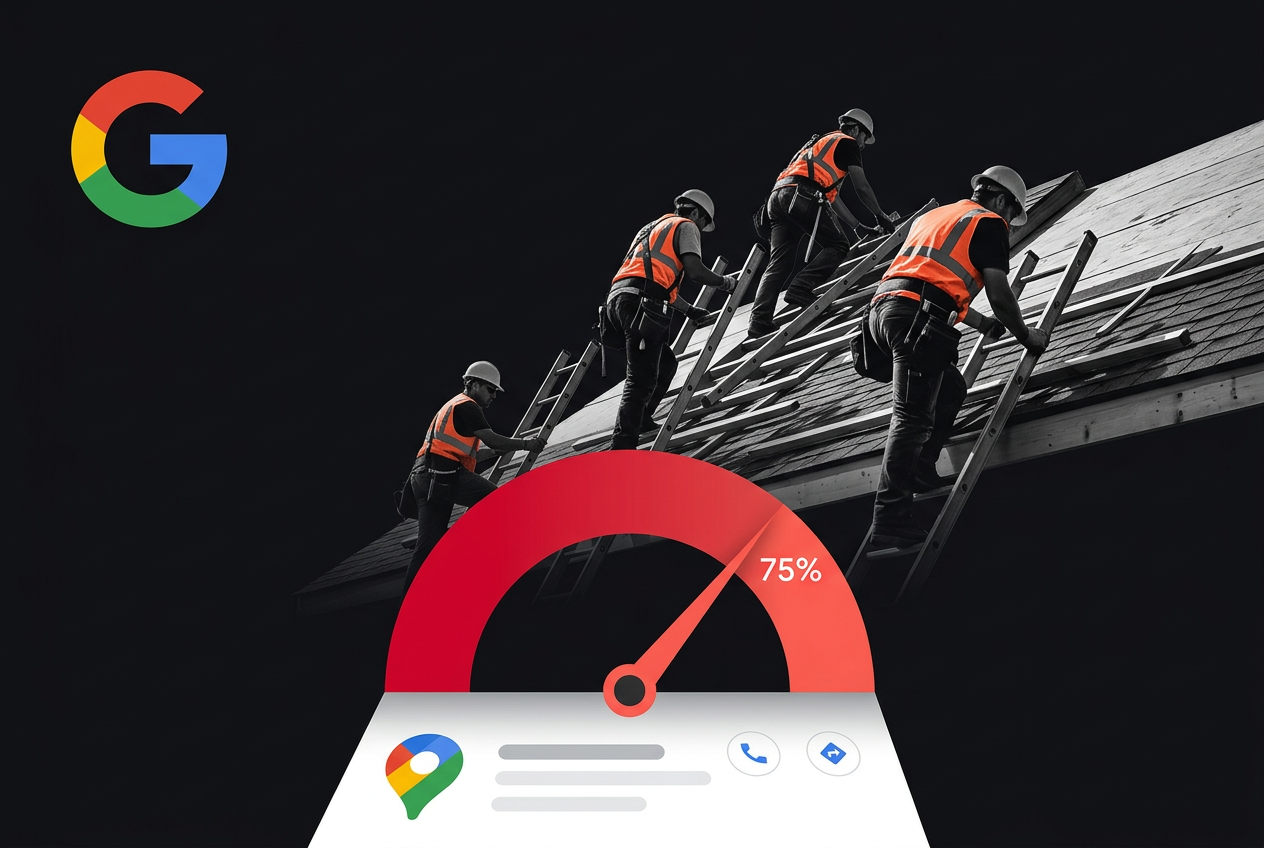
Google's September 2026 local pack update penalizes roofing contractors with sub-75% crew utilization, making operational efficiency a direct ranking factor.
Google rolled out a crew utilization signal in its September 2026 local pack algorithm update. Roofing contractors who cannot demonstrate greater than 75% crew utilization during posted booking windows are seeing 20 to 40 percent drops in map pack visibility.
This is not a cosmetic adjustment to review weight or keyword prominence. This is Google using real-time operational efficiency as a ranking factor in a vertical defined by weather dependencies, seasonal demand swings, and multi-day job timelines.
Roofers are the test case. Every other appointment-based service vertical is next.
What changed
Google Business Profile rankings historically weighted proximity, review velocity, category relevance, and engagement signals like click-through rate and direction requests. The September update introduced a new dimension: crew availability signals tied to operational throughput.
Roofers who maintain structured crew schedules, publish accurate booking windows, and demonstrate consistent utilization above 75% are receiving preferential treatment in the local three-pack. Those who cannot surface this data—or whose scheduling reveals chronic underutilization, frequent cancellations, or opaque availability—are falling.
The mechanism is straightforward. Google is ingesting scheduling data from connected platforms, cross-referencing posted availability with actual booking conversion, and inferring crew utilization from the delta between capacity and fill rate. If a roofing contractor publishes "we're available Tuesday through Thursday this week" but only books one of six available crew days, Google reads that as operational inefficiency or demand weakness.
Both hurt rankings.
The threshold appears to be 75% utilization during self-reported availability windows. Drop below that consistently, and map pack position degrades. Maintain it or exceed it, and you gain an edge over competitors who lack the infrastructure to prove operational tightness.
Why roofing first
Roofing is the ideal vertical to pilot an operations-based ranking signal.
Jobs are multi-day and crew-dependent. A residential reroof typically requires two to four crew members over one to three days, depending on size and complexity. Commercial work scales further. Crew scheduling is the bottleneck, not lead volume.
Weather creates forced volatility. A forecast shift can compress or expand available work windows by days. Roofers who can dynamically reallocate crews, communicate updated timelines to customers, and keep utilization high despite weather disruption demonstrate operational maturity that correlates with customer satisfaction.
Seasonality is pronounced. Demand spikes in spring and summer, craters in winter in cold climates, and inverts in markets with monsoon or hurricane exposure. Google wants to reward contractors who manage utilization across these swings, not just those who rank well during peak season and go dark in the off-months.
High ticket values mean fewer transactions per crew per week. A typical residential reroof runs eight thousand to twenty thousand dollars. Conversion matters more than volume. Google's interest is in surfacing contractors who convert inquiries into scheduled work efficiently, fill their calendars predictably, and minimize no-shows or reschedules that signal poor customer experience or operational friction.
All of these factors make roofing a clean vertical to test whether operational data improves ranking quality. If the signal works—if higher-utilization roofers deliver better customer outcomes and lower bounce rates from search—Google will expand it.
What Google is measuring
The crew utilization signal is constructed from multiple operational data points, most of which flow through integration between Google Business Profile and scheduling or operations platforms.
Posted availability windows. If a roofer publishes "next available: September 23" or integrates a booking calendar that shows open crew slots, Google tracks whether those slots fill.
Booking conversion rate. The ratio of inquiries (calls, messages, direction requests) to confirmed, scheduled jobs. A roofer with high inquiry volume but low schedule fill signals either poor sales conversion or inaccurate availability data.
Cancellation and reschedule frequency. Jobs that move repeatedly or cancel close to the scheduled date reduce utilization and suggest operational or communication breakdowns.
Crew utilization percentage. The percentage of available crew days that result in billable work. A three-person crew with five available days per person per week has fifteen crew days of capacity. If only ten days are booked, utilization is 67%. Below the threshold.
Response consistency. Whether the business responds to inquiries with accurate, structured availability information or vague, inconsistent timelines. Structured responses that lead to calendar commits signal operational control.
Google is not asking roofers to expose proprietary margin data or crew wages. It is inferring operational health from scheduling behavior that customers already experience. If a prospect calls, gets told "we'll get back to you," never receives a firm date, and books a competitor, that interaction is invisible to Google. But if that pattern repeats across dozens of inquiries, the aggregate signal—low conversion, low utilization—becomes visible.
The operations visibility problem
Most roofing contractors do not operate with the infrastructure to surface these signals cleanly.
Scheduling happens in a foreman's notebook, a whiteboard in the office, or a shared spreadsheet. Availability is approximated, not calculated. A customer calls, the office manager checks with the crew lead, estimates a window, and pencils it in. If weather delays the prior job, the pencil gets erased. If a higher-value commercial job comes in, the residential reroof gets bumped.
None of this is malicious. It is survival in a vertical with thin margins, unpredictable conditions, and labor constraints.
But it is invisible to Google. And invisible operations now cost visibility in search.
The roofers maintaining or gaining map pack position in the wake of the September update share a common characteristic: they run structured scheduling systems that integrate with their online presence. They know crew capacity by day, track utilization in real time, publish accurate next-available dates, and update availability dynamically as jobs move or weather shifts.
They are not necessarily better roofers. They are better operators. And Google is rewarding operational transparency because it correlates with customer experience.
What this means for other verticals
Roofing is the pilot. The logic applies across appointment-based service businesses.
Painting contractors run multi-day jobs with crew dependencies, weather exposure, and seasonal demand curves. Utilization matters. A painter who books every available crew day and manages a tight schedule will outrank a painter with the same review profile but chronic gaps in the calendar.
Remodelers and general contractors face longer job timelines, more complex crew coordination, and higher reschedule risk. Google could easily extend the utilization signal to reward GCs who maintain predictable project timelines and minimize schedule slippage.
Residential and commercial cleaning companies operate on recurring appointment models with route density and time-block efficiency as core operational metrics. Utilization in this vertical translates to fill rate on available service windows and minimized drive time between jobs. Both are measurable through scheduling platforms.
Mobile pet groomers run single-operator or small-team models with appointment slots as inventory. A groomer with 90% appointment utilization signals strong demand and operational control. One with 50% utilization either has poor demand or poor scheduling—and Google will penalize both.
Landscaping and lawn care businesses navigate seasonality, weather, recurring service routes, and crew allocation across maintenance and project work. Utilization tracking separates well-run operations from those flying blind.
Pest control, plumbing, electrical, garage door service—all verticals where appointment availability, response time, and schedule fill rate already correlate with customer satisfaction—are natural extensions of this ranking signal.
If you run an appointment-based service business and your scheduling infrastructure cannot produce a utilization percentage by crew or technician by week, you are building on borrowed time. Google just proved it will rank operational efficiency, not just online reputation.
What to build now
The shift from "answer the phone" to "prove tight ops" requires infrastructure, not tactics.
Start with unified scheduling. Every inquiry—phone, web form, chat, text—must flow into a single scheduling system that tracks capacity, availability, and utilization in real time. Disparate tools, manual handoffs, and calendar guesswork create blind spots that degrade both operations and ranking signals.
Implement crew or technician capacity modeling. Define available days per crew member per week, account for non-billable time (travel, prep, weather delays), and calculate utilization as a percentage of available capacity. This is not theoretical. It is the denominator Google is measuring against your bookings.
Publish structured availability on your Google Business Profile and website. "Next available" dates, booking windows, or integrated calendar tools that show real open slots. Vague language like "call for availability" or "serving your area" does not generate the signal. Specificity does.
Track inquiry-to-booking conversion by source. If your Google Business Profile generates fifty calls per month but only converts eight to scheduled jobs, your utilization signal is weak and your ranking will suffer. Tighten sales process, speed up response time, and close the loop between inquiry and calendar commit.
Monitor cancellation and reschedule rates by job type and lead source. High reschedule frequency suggests either poor expectation-setting at sale, operational unpredictability, or low customer commitment. All three damage utilization and ranking. Address root causes, not symptoms.
Integrate your scheduling platform with your online presence. Google rewards data it can verify. If your operations live in a disconnected tool, you cannot surface the signals that drive the new ranking logic. Integration is not optional.
The compound effect
Operational infrastructure built to satisfy a ranking algorithm also improves the business fundamentals that drive revenue and margin.
A roofing contractor who implements structured crew scheduling to boost map pack visibility also reduces downtime between jobs, improves job costing accuracy, and increases revenue per crew. Utilization discipline forces better sales qualification, tighter project timelines, and faster invoice cycles.
A painting contractor who tracks appointment conversion to maintain local search position also identifies which lead sources convert best, which sales reps close efficiently, and which job types deliver predictable margin. The infrastructure built for Google becomes the infrastructure that scales the business.
This is the leverage in systems thinking. You do not build scheduling infrastructure only to rank better. You build it because tight operations compound across acquisition, conversion, and delivery. The ranking boost is one output. Lower operational overhead, higher utilization, predictable revenue, and improved customer experience are the others.
Google is not penalizing roofers for weak operations out of malice. It is surfacing a signal that correlates with better customer outcomes. Contractors who run structured, predictable operations deliver on promises, communicate clearly, and create fewer negative experiences that lead to bounces back to search.
Google wants to rank those contractors higher. Building the infrastructure to prove operational efficiency is building the infrastructure to earn that ranking.
Operations as competitive moat
The September 2026 update introduces a new axis of competition in local search: operational visibility.
For years, roofing contractors competed on reviews, website optimization, backlink profiles, and proximity. A contractor with a strong review base and decent on-page SEO could maintain map pack visibility without operational excellence. Scheduling chaos, low utilization, and poor conversion were invisible to the algorithm.
That invisibility is gone.
Now, a roofing contractor with fewer reviews but higher crew utilization can outrank a competitor with better traditional SEO signals but poor operational metrics. The playing field has shifted toward operators who build infrastructure, not marketers who optimize tags.
This is defensible differentiation. Reviews can be gamed. Keywords can be copied. Backlinks can be bought. Crew utilization requires real operational discipline, integrated systems, and process maturity. It is harder to fake and harder to replicate quickly.
Contractors who invest in scheduling infrastructure, capacity planning, utilization tracking, and inquiry conversion now gain compounding advantages. They rank better, book more efficiently, operate with lower overhead, and create margin to reinvest in further operational improvements.
Competitors who ignore the signal will slide in rankings, lose inquiry volume, and face pressure to discount or chase low-quality leads to fill gaps. The gap widens.
The broader pattern
Google's crew utilization signal for roofers is part of a broader pattern: operational data is becoming marketing data.
Delivery times for e-commerce. Wait times for restaurants. Appointment availability for healthcare. Utilization for service businesses. Google is increasingly ingesting operational metrics and using them to rank businesses because those metrics predict customer satisfaction better than static content or review sentiment.
For appointment-based service businesses, this means the line between operations and marketing dissolves. Your scheduling system is your SEO. Your utilization rate is your ranking factor. Your conversion process is your visibility engine.
If your operations infrastructure cannot produce the signals Google wants to measure, you are not just operationally inefficient. You are invisible.
The roofers losing 20 to 40 percent map pack visibility in September 2026 are not losing because they are bad roofers. They are losing because they cannot prove they are good operators. The work quality may be identical to competitors who rank higher. The difference is infrastructure.
This dynamic will expand across every vertical where appointment availability and operational throughput correlate with customer experience. The winners will be businesses that build systems to measure, optimize, and expose the operational signals that algorithms reward.
The losers will be businesses that treat operations as a back-office function disconnected from growth.
What happens next
Google will expand this signal to other trades verticals in 2027. Painters, plumbers, electricians, HVAC, landscapers—all are candidates. The logic is identical: crew or technician utilization correlates with operational health, and operational health correlates with customer satisfaction.
Service businesses that wait until their vertical gets the update will spend months catching up while competitors who built infrastructure early compound their advantage.
The playbook is visible now. Track capacity. Measure utilization. Integrate scheduling with online presence. Publish structured availability. Convert inquiries to calendar commits efficiently. Minimize cancellations and reschedules.
These are not SEO tactics. They are operational fundamentals that generate SEO outcomes as a byproduct.
Roofers are the warning and the template. Ignore the warning, and you lose visibility when your vertical gets the update. Follow the template, and you gain a compounding edge in both rankings and operations before the algorithm shift even touches your market.
The era of optimizing content without optimizing operations is over. Google just made operational infrastructure a ranking factor. Build accordingly.